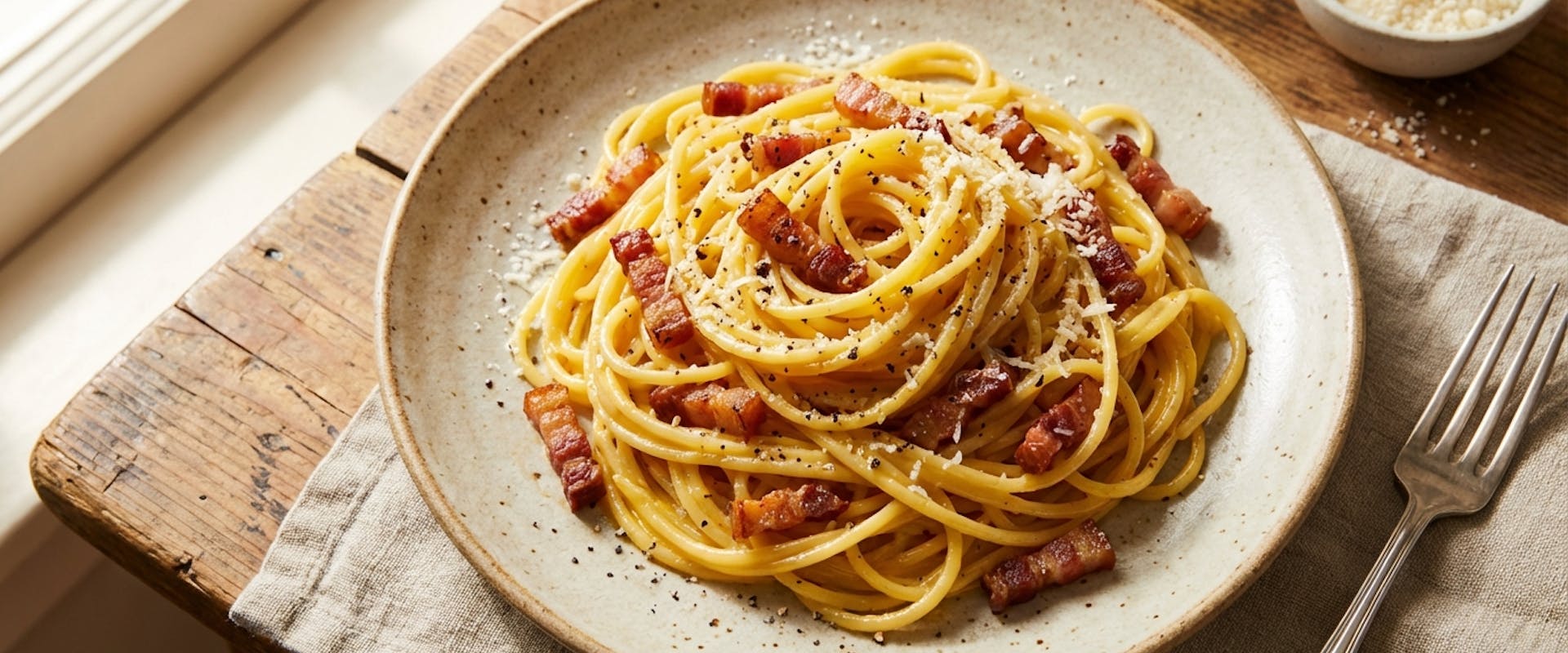
The Ultimate Guide to Perfect Carbonara: Rome's Silky Egg and Cheese Masterpiece
The moment hot pasta hits the egg mixture, time slows down. You're not just cooking—you're performing alchemy. One wrong move and you have scrambled eggs. One perfect toss and you have carbonara: that impossibly silky, golden sauce that has made Romans swoon for generations.
Why Carbonara Captures Our Hearts
Four ingredients. That's all authentic carbonara requires: pasta, cured pork, eggs, and aged cheese. Yet this simplicity is precisely what makes it terrifying and magnificent in equal measure.
In a Trastevere trattoria, I once watched a chef prepare forty portions in a single service. His hands moved with the muscle memory of twenty years, never once reaching for cream, never hesitating on temperature. "Carbonara doesn't forgive," he told me between orders. "But when you understand her, she gives you everything."
The Four Pillars of Authentic Carbonara
Pillar One: The Cured Pork
Guanciale is the soul of carbonara—cured pork jowl with delicate fat that renders into liquid silk. Its flavor is deeper and more complex than pancetta or bacon.
If guanciale isn't available, quality pancetta is acceptable. What's never acceptable? Bacon. The smokiness overwhelms the dish's delicate balance.
How to prepare it:
- Remove the rind if present
- Cut into small strips or cubes (about 5mm)
- Start in a cold pan over medium heat
- Render slowly until fat is translucent and edges are golden (8-10 minutes)
- Never let it become crispy—you want chewy, flavorful bites
Pillar Two: The Eggs
The ratio matters enormously. For every 100g of pasta:
- 1 whole egg
- 1-2 additional yolks
Yolks create richness; whites add body. Too many whites make the sauce rubbery. Too few yolks leave it thin.
The temperature secret: Your egg mixture should be at room temperature before it meets the pasta. Cold eggs hitting hot pasta create uneven cooking and a higher risk of scrambling.
Pillar Three: The Cheese
Pecorino Romano DOP is non-negotiable. This sheep's milk cheese, aged at least five months, brings the salty, sharp punch that defines carbonara.
Some modern recipes add Parmigiano-Reggiano for sweetness. Traditional Roman cooks consider this heresy. I say try both and decide for yourself.
Critical technique: Grate the cheese on a Microplane—the finest possible. Larger gratings won't emulsify properly and create a grainy sauce.
Pillar Four: The Pasta
Rigatoni, spaghetti, or tonnarelli are traditional choices. The ridges of rigatoni catch sauce beautifully; spaghetti offers elegance; tonnarelli (square-cut egg pasta) is Rome's favorite.
Whatever you choose, remember: your pasta water is liquid gold. The starch it contains is essential for emulsification.
The Complete Carbonara Method
Ingredients (Serves 2)
- 200g pasta (rigatoni or spaghetti)
- 150g guanciale, cut into small strips
- 3 large egg yolks + 1 whole egg
- 60g Pecorino Romano, finely grated
- Freshly cracked black pepper (generous)
- Salt for pasta water only
Step-by-Step Technique
Step 1: Prepare Your Components
Bring eggs to room temperature. Whisk yolks, whole egg, and two-thirds of the pecorino in a bowl until thick and creamy. Add generous black pepper. Set aside.
Step 2: Render the Guanciale
Place guanciale in a cold pan. Turn heat to medium. Let the fat render slowly—this takes 8-10 minutes. The edges should be golden, the fat translucent and pooled in the pan.
Once done, turn off the heat. The residual heat will continue working.
Step 3: Cook the Pasta
Boil pasta in generously salted water until 1 minute shy of al dente. Before draining, reserve 250ml of pasta water.
Step 4: The Critical Toss
Using tongs, transfer pasta directly to the guanciale pan (still off the heat). Toss to coat with rendered fat.
Wait 30 seconds. This is crucial—the pan must cool slightly.
Pour the egg mixture over the pasta. Toss vigorously and continuously. Add pasta water in small splashes to achieve a silky, flowing consistency. The sauce should coat each strand without pooling.
Step 5: Serve Immediately
Divide between warm bowls. Top with remaining pecorino and more black pepper. Carbonara waits for no one—eat within two minutes of plating.
The Science of Not Scrambling
Understanding why eggs scramble prevents disaster:
- Egg proteins coagulate between 65-70°C (149-158°F)
- Above 80°C (176°F), they become rubbery and separate
- The pasta and residual pan heat provide gentle, indirect warmth
- Constant tossing distributes heat evenly
- Pasta water's starch creates a protective buffer
The pro technique: If you're nervous, remove the pan from heat completely before adding eggs. Use only residual heat. You can always add more warmth; you can't uncook scrambled eggs.
Common Mistakes and How to Avoid Them
❌ Adding eggs to a hot pan on active heat The eggs cook too fast. Always work off the heat.
❌ Skipping the pasta water Without starch, the sauce won't emulsify. It will separate or clump.
❌ Using pre-grated cheese Anti-caking agents prevent proper melting. Always grate fresh.
❌ Being timid with black pepper Pepper isn't garnish here—it's a primary flavor. Use 2-3 times what you think you need.
❌ Letting it sit Carbonara thickens rapidly as it cools. Serve and eat immediately.
Where to Taste the Best in Rome
Roscioli Salumeria – Their carbonara uses house-cured guanciale. The sauce arrives glistening.
Da Enzo al 29 – A tiny Trastevere spot with textbook technique. Reservations essential.
Felice a Testaccio – Famous for cacio e pepe, but their carbonara rivals it.
The Philosophy of Four Ingredients
What carbonara teaches us extends beyond pasta. It demonstrates that mastery isn't about complexity—it's about understanding a few elements so deeply that you can coax magic from them.
Every Roman grandmother knows this. Every young cook must learn it through failure: through scrambled attempts and broken sauces and cursing at eggs.
But then comes that moment when everything clicks. The pasta and eggs unite in golden silk. The guanciale perfumes every bite. The pecorino sings its salty song.
That's carbonara. That's why we keep trying until we get it right.