
Shakshuka Sunrise: The North African Breakfast That Conquered the World
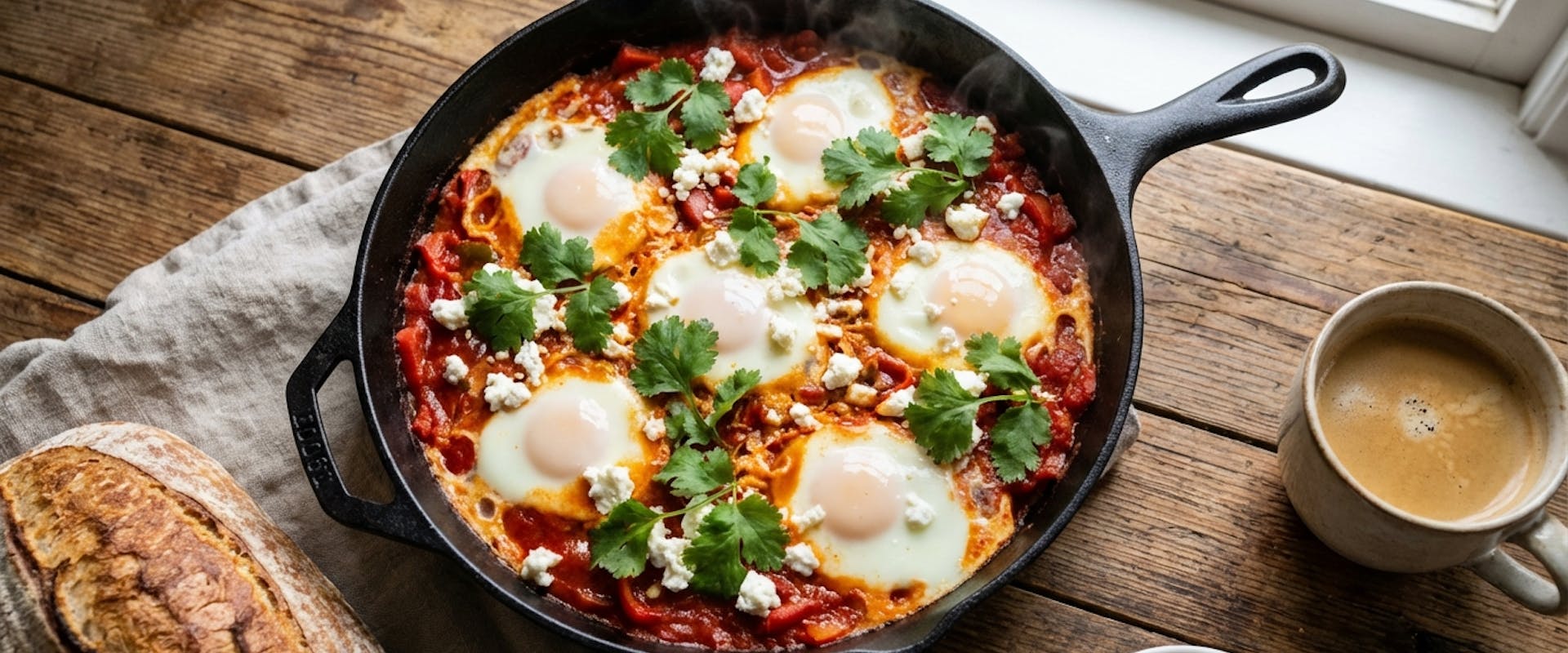
The cast iron skillet arrives at my table in a Jaffa café, still bubbling from the stove. Eggs nestle in a crimson sea of spiced tomato sauce, their yolks trembling with each bubble that breaks the surface. A handful of cilantro and crumbled feta crown the dish. This is shakshuka, and it's about to change my morning forever.
The Dish That Crossed Borders
Shakshuka's origins spark friendly debate across the Mediterranean. Tunisians claim it as their own, pointing to similar dishes like ojja and chakchouka. Libyans insist their version came first. Moroccans nod knowingly at their matesha. The Ottoman Empire's influence spread egg-and-tomato dishes across North Africa and the Middle East.
But it was in Israel where shakshuka found its global voice. Brought by North African Jewish immigrants in the 1950s, the dish became a staple of Israeli café culture. From Tel Aviv, it conquered brunch menus worldwide, appearing in Brooklyn bistros, London cafés, and Melbourne breakfast spots.
The name itself offers clues: in Arabic dialects, shakshuka roughly translates to "a mixture" or "all shaken up"—a perfect description of this glorious jumble of eggs, tomatoes, and spices.
The Philosophy of Simplicity
What makes shakshuka brilliant is its simplicity masking complexity. The ingredient list is short, but the technique matters. At its heart: good tomatoes, eggs, onions, peppers, and spices. Yet in those few components lies infinite variation.
In Tunisia, the sauce runs thick with harissa fire. Israeli versions lean sweeter, sometimes adding bell peppers. Turkish menemen scrambles the eggs into the sauce rather than poaching them whole. Palestinian variations might include ground meat. Greek strapatsada lightens the sauce and often includes feta.
The beauty of shakshuka is its flexibility. It welcomes improvisation while maintaining its essential character: eggs embraced by spiced tomato warmth.
The Morning I Learned the Secrets
At Dr. Shakshuka in Jaffa—a institution run by a Libyan Jewish family since 2001—I watch Bino Gabso work his magic. His hands move with the efficiency of someone who's made shakshuka thousands of times.
"The sauce must be right first," he instructs, stirring a skillet where onions and peppers slowly surrender to olive oil. "Patient cooking. No rushing. The vegetables must give their sweetness before the tomatoes join."
He adds crushed tomatoes, a pinch of cumin, paprika, and a shake of something from an unmarked container. "Family spice blend," he winks. "Cannot tell you everything."
The sauce simmers, reducing and concentrating. Only when it reaches the right consistency—thick enough to hold the eggs, loose enough to bubble—does he crack them in.
"Make a well with your spoon. Crack the egg into the well. Never directly into the sauce, or the yolk breaks. Then cover. Steam finishes the job."
Five minutes later, the eggs emerge with whites set firm and yolks still liquid gold.
Regional Variations Worth Knowing
Tunisian Shakshuka
The original is fierce: harissa paste adds complex heat, sometimes so much the sauce glows orange-red. Merguez sausage often joins the party. Preserved lemon brings brightness. The eggs poach in volcanic intensity.
Israeli Shakshuka
Sweeter, mellower, often with bell peppers adding vegetable sweetness. Feta cheese crumbled on top is nearly universal. Fresh herbs—cilantro or parsley—finish the dish. This is the version that conquered café menus worldwide.
Turkish Menemen
Scrambled rather than poached, menemen folds eggs into the tomato mixture, creating a looser, softer consistency. Green peppers are essential. Often served with kasar cheese melted in.
Green Shakshuka
A modern innovation popular in Israel: the tomato sauce replaced entirely with a mixture of spinach, chard, or other greens blended with herbs, creating a vibrant green base. Lighter, spring-like, equally delicious.
The Perfect Shakshuka: A Master Recipe
Classic Shakshuka
Ingredients (serves 4)
For the sauce:
- 3 tablespoons olive oil
- 1 large onion, diced
- 1 red bell pepper, diced
- 4 cloves garlic, minced
- 1 teaspoon ground cumin
- 1 teaspoon paprika
- 1/2 teaspoon ground caraway (optional, but traditional)
- Pinch of cayenne or red pepper flakes
- 800g canned crushed tomatoes (or fresh, if amazing quality)
- 1 teaspoon sugar (to balance acidity)
- Salt and black pepper to taste
- 1-2 tablespoons harissa paste (optional, for heat)
For finishing:
- 6-8 large eggs
- Fresh cilantro or parsley, roughly chopped
- Crumbled feta cheese
- Crusty bread for serving
Method:
Heat olive oil in a large skillet (cast iron ideal) over medium heat. Add onions and bell pepper. Cook slowly, stirring occasionally, for 8-10 minutes until softened and beginning to caramelize. This patience is essential—rushed vegetables stay harsh.
Add garlic and spices (cumin, paprika, caraway, cayenne). Stir for one minute until fragrant. The spices should bloom but not burn.
Pour in crushed tomatoes. Add sugar and harissa if using. Season with salt and pepper. Simmer uncovered for 15-20 minutes, stirring occasionally, until the sauce thickens noticeably. It should coat a spoon and hold its shape when you draw a line through it.
Taste and adjust seasoning. The sauce should be bold—eggs will mellow everything.
Using the back of a spoon, create six to eight wells in the sauce, spacing them evenly. Crack an egg into a small bowl first (to check for shells), then gently slide it into a well. Repeat with remaining eggs.
Season eggs with a pinch of salt and pepper. Cover the skillet with a lid or aluminum foil. Reduce heat to medium-low. Cook for 5-8 minutes depending on desired doneness:
- 5 minutes: whites just set, yolks very runny
- 7 minutes: whites firm, yolks liquid gold (ideal)
- 8+ minutes: yolks beginning to set (still good, but less luxurious)
Remove from heat. Garnish generously with fresh herbs and crumbled feta. Serve directly from the skillet with crusty bread for scooping.
The Art of the Perfect Egg
The eggs make or break shakshuka. Too firm, and you lose the luxury of yolk mixing with sauce. Undercooked whites are unpleasant. The sweet spot is narrow.
Professional tips:
Create proper wells: The sauce should form distinct pockets for each egg. If the sauce is too thin, it will flow back and the eggs will slide together.
Crack into a bowl first: This prevents shells in your shakshuka and lets you check egg quality before commitment.
Cover is essential: Steam cooks the top of the eggs. Without covering, you'll have runny whites and overcooked bottoms.
Watch, don't time: Every stove differs. Every pan conducts heat differently. When the whites are opaque and set but the yolks still jiggle, remove from heat immediately. Carryover heat will finish the job.
Beyond Breakfast
Though shakshuka appears on breakfast and brunch menus worldwide, in its homelands it's eaten at any hour. Lunch shakshuka. Dinner shakshuka. Late-night shakshuka after a long evening.
The dish's versatility extends beyond timing. Add crumbled merguez sausage or ground lamb for heartier versions. Stir in chickpeas for protein and texture. Top with different cheeses—goat cheese, halloumi, aged cheddar. Add greens—spinach, kale, chard—wilted into the sauce.
Leftover shakshuka sauce (without eggs) refrigerates beautifully for a week. Reheat, crack in fresh eggs, and breakfast is solved.
The Bread Question
Shakshuka demands bread. This is not optional. The sauce must be scooped, the yolk must be sopped, and forks are insufficient tools.
Traditionally, this means:
Challah: Soft, eggy, perfect for Israeli shakshuka Pita: The Middle Eastern standard, puffy and pocket-forming Khobz: North African flatbread, often whole wheat Baguette: French colonialism's gift to North African breakfast Sourdough: The Western adaptation, crusty and tangy
Toast the bread lightly. Drizzle with olive oil. Watch as sauce and yolk soak into every crevice. This is the real meal.
The Global Shakshuka Movement
From its North African roots and Israeli popularization, shakshuka has become genuinely global. Food blogs feature hundreds of variations. Restaurants from Sydney to Stockholm serve their interpretations.
Some innovations honor the original; others push boundaries:
- Green shakshuka with herbs and leafy greens replacing tomatoes
- White shakshuka built on cream or yogurt bases
- Winter shakshuka with roasted root vegetables
- Seafood shakshuka with shrimp or white fish instead of eggs
- Breakfast shakshuka burritos in California
- Shakshuka pizza in New York
Purists may scoff, but this evolution proves the dish's flexible soul. Shakshuka accommodates reinterpretation while maintaining its essential identity: something warm, something saucy, something to soak with bread.
The Lesson of the Skillet
My final shakshuka in Israel comes at a beach café in Tel Aviv, watching the Mediterranean at sunrise. The skillet arrives as the sun breaks the horizon—timing the waiter clearly planned.
The eggs are perfect. The sauce has heat and sweetness and depth. The bread is warm. For ten minutes, I eat slowly, watching waves roll in, understanding why this dish has traveled the world.
Shakshuka teaches that great food doesn't require complexity or expense. It requires good ingredients, proper technique, and patience to let flavors develop. It proves that the same dish can belong to multiple cultures simultaneously, each adding their soul without diminishing others.
Most importantly, it reminds us that the best meals are often the simplest—eggs and tomatoes transformed through heat and time into something greater than their parts.
Make shakshuka this weekend. Start with the recipe above, then make it yours. Add the spices your family loves, the vegetables you find at the market, the cheese that makes you happy. Serve it to people you care about, straight from the skillet, with plenty of bread.
That's how traditions continue—not through rigid preservation, but through joyful adaptation. Every shakshuka you make joins the conversation that's been happening across the Mediterranean for generations.
The skillet is ready. The sauce is bubbling. Crack those eggs.