
Pad Thai Mastery: Unlocking the Secrets of Thailand's Most Famous Street Food
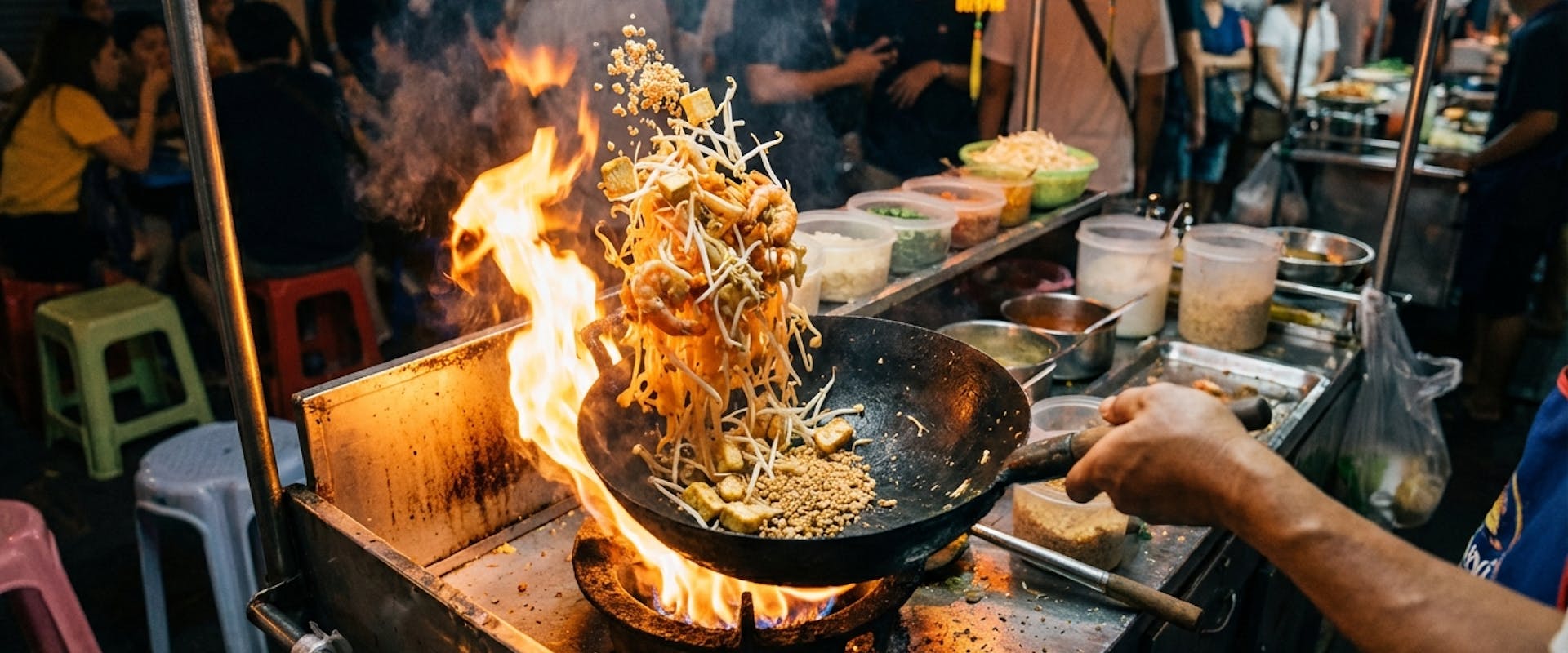
The wok glows orange-hot as Auntie Nong tosses rice noodles with the confidence of forty years' practice. Flames leap upward, licking the sides of the pan as tamarind, fish sauce, and palm sugar caramelize into Thailand's signature street food. This is pad thai—a dish so beloved it transcends borders, yet so often misunderstood beyond Thailand's shores.
The Accidental Ambassador
Pad thai's story begins not in ancient tradition but in calculated nationalism. In the 1930s and 1940s, Prime Minister Plaek Phibunsongkhram promoted pad thai as part of a campaign to modernize Thailand and create a unified national identity. The government distributed recipe cards, held cooking competitions, and positioned this stir-fried noodle dish as distinctly Thai.
The strategy worked spectacularly. Within decades, pad thai became synonymous with Thai cuisine itself—the gateway dish that introduced millions to the country's culinary riches.
"My grandmother learned to make pad thai from those government pamphlets," Nong tells me, her spatula never stopping its rhythmic dance. "Now tourists come to Thailand just to eat it. She would laugh at that."
The Architecture of Perfect Pad Thai
The Noodles: Foundation of Everything
Authentic pad thai uses sen lek—thin, flat rice noodles, about a quarter-inch wide. Fresh noodles are ideal, but dried work if properly prepared. The key is soaking them until pliable but not soft—they'll finish cooking in the wok.
Soak dried rice noodles in room temperature water for 30-60 minutes until flexible. They should bend without breaking but still have resistance. This texture is critical—over-soaked noodles turn to mush in the wok, while under-soaked noodles won't absorb the sauce.
The Sauce: Sweet, Sour, Salty Trinity
Pad thai's sauce achieves balance through three primary ingredients:
Tamarind paste provides the essential sourness—fruity, complex, nothing like vinegar. This is non-negotiable. Lime juice cannot substitute.
Palm sugar adds sweetness with caramel notes that white sugar lacks. The best vendors use whole palm sugar, shaving it fresh.
Fish sauce delivers the salty, umami backbone. Quality matters here—seek out fish sauce with clear amber color and no sediment.
The ratio varies by cook, but a common starting point is 3 tablespoons tamarind paste, 2 tablespoons palm sugar, and 2 tablespoons fish sauce. Adjust to taste—pad thai should hit sweet, sour, and salty in equal measure, with a subtle undercurrent of umami.
The Protein: Shrimp or Tofu, Choose Your Path
Street vendors typically offer pad thai gung (with shrimp) or pad thai jay (vegetarian, with tofu). Both are traditional. The shrimp should be fresh, medium-sized, and cooked just until they curl. Overcooked shrimp turns rubbery and sad.
For tofu, use extra-firm varieties, pressed and cut into small cubes. Pan-fry the tofu separately until golden before adding to the wok. This creates textural contrast—crispy outside, tender within.
The Supporting Cast
Garlic and shallots provide the aromatic base, minced fine and fried in oil until fragrant.
Eggs are scrambled directly in the wok, creating ribbons that coat the noodles.
Chinese chives (or green onions as substitute) add sharp, fresh bite.
Bean sprouts contribute crunch—half cooked with the noodles, half served fresh on the side.
Roasted peanuts, crushed, provide nutty richness and textural contrast.
Dried shrimp (optional but traditional) add concentrated seafood umami.
Pickled radish (chai poh) brings salty-sweet complexity—a secret ingredient many overlook.
The Technique: High Heat, Fast Hands
Pad thai demands confidence. The wok must be screaming hot—hot enough that ingredients sizzle on contact. Work quickly, keep everything moving, and commit to your decisions. Hesitation creates mush.
The Process
Prep everything first. Once cooking begins, there's no time to chop vegetables or mix sauce. Have every ingredient measured, cut, and within arm's reach.
Heat the wok until smoking. Add oil, swirl to coat, then add protein. For shrimp: 60-90 seconds until pink. Remove and set aside.
Lower heat slightly. Add garlic and shallots, stirring constantly for 30 seconds until fragrant but not burned.
Push aromatics to one side. Crack eggs into the cleared space. Let them set for a few seconds, then scramble and mix with aromatics.
Add noodles and sauce. Toss vigorously, ensuring every strand gets coated. The noodles should stick slightly but not clump. If they stick too much, add a splash of water.
Add protein back. Include chives, half the bean sprouts, dried shrimp, and pickled radish. Toss for another minute.
Finish with sugar and tamarind. Some cooks add a final pinch of palm sugar and squeeze of tamarind for balance. Taste and adjust.
Plate immediately. Garnish with remaining bean sprouts, crushed peanuts, lime wedges, and dried chili flakes.
Regional Variations
Bangkok Street Style
The capital's pad thai runs slightly sweeter than other regions, with generous peanuts and the option to add chili-in-vinegar tableside. Portions are substantial—this is a full meal, not a side dish.
Old-School Thonburi
In Bangkok's Thonburi district, some vendors maintain older styles with less sugar, more tamarind, and the addition of banana blossom for texture.
Ayutthaya Pad Thai
The ancient capital claims to have influenced early pad thai development. Their version includes wrapping the finished dish in a thin egg crepe—an elegant presentation reserved for sit-down restaurants.
The Recipe: Making Pad Thai at Home
Serves 2 (generously)
Ingredients:
For the sauce:
- 3 tablespoons tamarind paste
- 2 tablespoons palm sugar, grated
- 2 tablespoons fish sauce
- 1 tablespoon water
For the dish:
- 200g dried rice noodles (sen lek)
- 3 tablespoons vegetable oil
- 3 cloves garlic, minced
- 2 shallots, minced
- 8-10 medium shrimp, peeled and deveined
- 2 eggs
- 1 cup bean sprouts (divided)
- 2 tablespoons dried shrimp, chopped (optional)
- 2 tablespoons pickled radish, chopped
- 3 stalks Chinese chives, cut into 2-inch pieces
- 1/4 cup roasted peanuts, crushed
- Lime wedges
- Dried chili flakes
Method:
Soak noodles in room temperature water for 45 minutes until flexible. Drain thoroughly.
Mix sauce ingredients in a bowl, stirring until palm sugar dissolves. Set aside.
Heat wok over high heat until smoking. Add 2 tablespoons oil. Add shrimp, cook 60-90 seconds until pink. Remove and set aside.
Add remaining oil to wok. Add garlic and shallots, stir-fry 30 seconds until fragrant. Push to one side of wok.
Crack eggs into empty side of wok. Let set for a few seconds, then scramble and mix with aromatics.
Add drained noodles and sauce. Toss vigorously for 2-3 minutes until noodles soften and absorb sauce. If noodles stick, add 2 tablespoons water and continue tossing.
Return shrimp to wok. Add half the bean sprouts, dried shrimp, pickled radish, and chives. Toss for 1 minute until heated through.
Taste and adjust seasoning with additional fish sauce (salty), palm sugar (sweet), or tamarind (sour).
Plate immediately. Garnish with remaining bean sprouts, crushed peanuts, lime wedges, and chili flakes.
Pro Tips from the Masters
Don't crowd the wok. Making pad thai for more than two servings requires cooking in batches. Overcrowded woks create steam, turning noodles soggy instead of caramelized.
Embrace the char. Those slightly scorched bits clinging to noodles? That's wok hei—the breath of the wok—and it's desirable. High heat creates complexity.
Adjust sauce to noodle quantity. Different brands of rice noodles absorb liquid differently. Start with the recipe amounts, but be ready to add more sauce if noodles seem dry.
Serve immediately. Pad thai is at its peak the moment it leaves the wok. The noodles continue absorbing sauce as they sit, and the textural contrast of crunchy peanuts against tender noodles fades quickly.
Room temperature noodles work better. If you've refrigerated soaked noodles, bring them to room temperature before cooking. Cold noodles require longer cooking time, increasing the risk of overcooking.
Where to Find Pad Thai Pilgrimage-Worthy Pad Thai
Bangkok
Thipsamai (313 Mahachai Road) - Operating since 1966, famous for pad thai wrapped in egg crepe and cooked over charcoal. The line stretches down the block but moves quickly.
Pad Thai Fai Ta Lu (Charcoal Fire Pad Thai) - Multiple locations, cooking over traditional charcoal instead of gas. The smoke adds complexity impossible to replicate at home.
Pad Thai Mae Am - A simple street cart in Rama VI that locals swear makes the city's best. No English sign, no fixed hours, just perfect pad thai when she decides to cook.
The Street Cart Experience
The best pad thai often comes from unnamed carts—a vendor with a single wok, a cooler of ingredients, and decades of muscle memory. Look for carts surrounded by local customers, especially after 10 PM when office workers seek late-night sustenance.
The Democracy of Pad Thai
What strikes me about pad thai is its accessibility. Unlike complex curries requiring hours of paste-pounding or intricate soups demanding overnight broths, pad thai welcomes home cooks. The ingredients are findable, the technique learnable, the results deeply satisfying.
Yet perfection remains elusive. I've made pad thai dozens of times, and while each batch improves, I've never quite matched the version from Auntie Nong's street cart—that perfect char, that ideal textural balance, that indefinable something that comes from making the same dish thousands of times.
"The wok remembers," she tells me, her spatula scraping centuries-old carbon from the pan's surface. "Every pad thai I make teaches it something. Your wok is still learning."
Maybe that's pad thai's real gift—not just a dish we can make, but one we can spend a lifetime mastering. One that rewards practice, punishes shortcuts, and never quite reveals all its secrets.
The wok glows orange in the Bangkok night. Another order arrives. Nong reaches for the noodles, and the dance begins again.