
Bún Chả Hanoi: Vietnam's Perfect Balance of Smoke, Sweet, and Sour
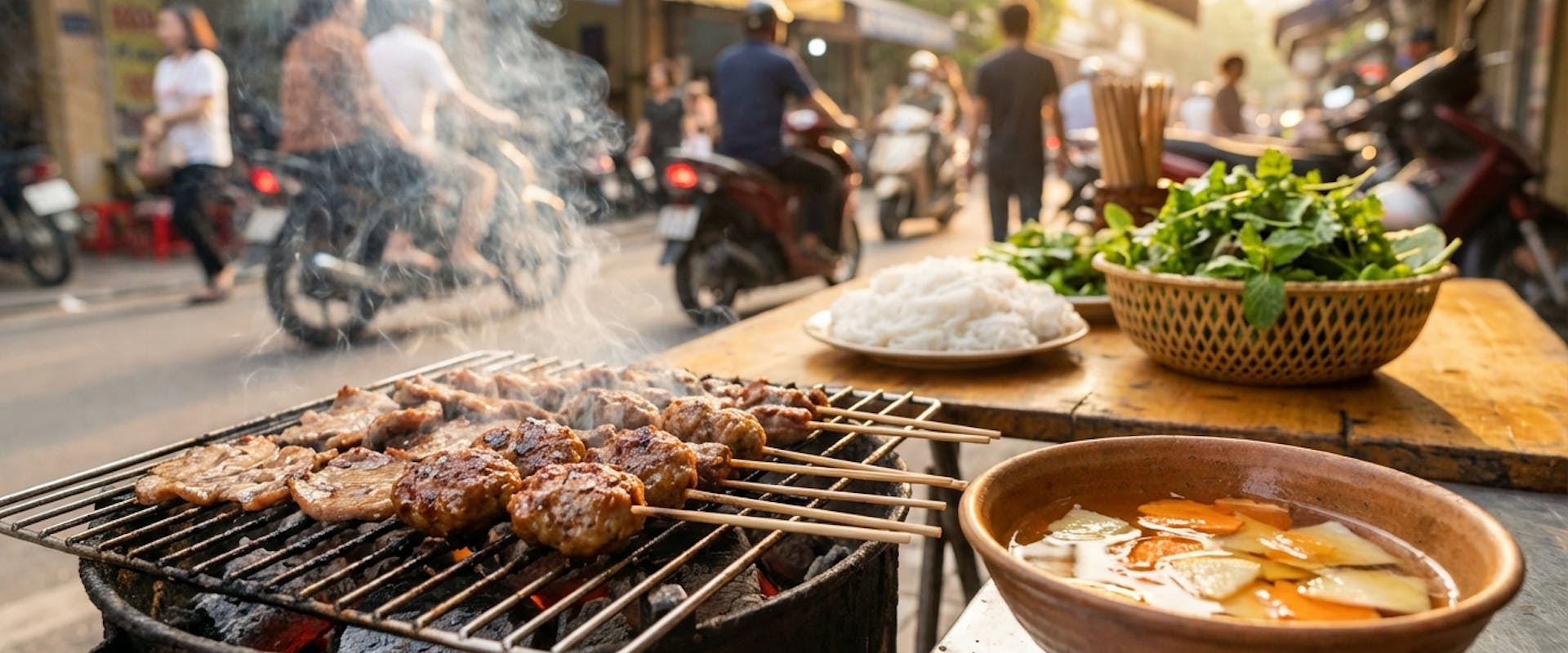
The charcoal smoke drifts through the narrow alley off Hàng Mành Street, carrying the irresistible aroma of caramelizing pork fat. At a sidewalk stall barely wider than the grill itself, a woman fans the coals with practiced efficiency. Fatty pork patties sizzle over the flames, their edges blackening just so, while marinated strips of pork belly char to mahogany perfection.
This is bún chả—Hanoi's most addictive lunch, and the dish that needs no introduction after a certain presidential visit in 2016.
The Dish That Stopped Barack Obama
When President Obama sat down at Bún Chả Hương Liên with Anthony Bourdain in May 2016, ordering "the usual" like a regular customer, he unknowingly launched bún chả into international consciousness. The restaurant now preserves that table behind glass, the beer bottles and empty bowls displayed like museum artifacts.
But Hanoians have been lining up for bún chả long before any presidential endorsement. This is working-class lunch food—affordable, quick, and perfectly calibrated to Vietnam's preference for layered flavors and fresh herbs.
Understanding Bún Chả's Architecture
Bún chả is deceptively simple: grilled pork, rice noodles, herbs, and dipping sauce. But within that simplicity lies the essence of Vietnamese culinary philosophy—balance.
The Pork: Two Cuts, Two Textures
Chả (Grilled patties): Ground pork mixed with fish sauce, sugar, garlic, and shallots, formed into small round patties. These are grilled until caramelized outside, still juicy within. The key is the ratio of meat to fat—enough fat to keep them moist, not so much that they fall apart.
Nem (Grilled strips): Thin slices of pork belly, marinated in similar seasonings but left in strips. These char more aggressively, developing crispy edges while the fat renders and bastes the meat. The contrast between chewy-crispy exterior and tender interior is essential.
Both are grilled over charcoal—never gas, never electric. The smokiness from dripping fat hitting hot coals is non-negotiable.
The Nước Chấm: Sweet-Sour Alchemy
The dipping sauce makes or breaks bún chả. It's a variation of nước chấm—the ubiquitous Vietnamese dipping sauce—but with proportions specific to this dish.
Essential components:
- Fish sauce (nước mắm) for umami depth
- Sugar or caramelized sugar water for sweetness
- Fresh lime juice for acidity
- Rice vinegar for additional sourness
- Fresh garlic and chili, sliced thin
- Shredded green papaya or carrots for texture
The liquid should be balanced—not too sweet, not too sour, with enough fish sauce funk to be distinctly Vietnamese but not overwhelming. When the hot pork hits this cool, sweet-sour bath, magic happens.
The Supporting Cast
Bún (Rice vermicelli): Fresh white rice noodles, served at room temperature, drained well. They should have a slight springiness but break easily when bitten.
Herbs: A plate piled high with Vietnamese perilla (shiso leaves), lettuce, mint, and Thai basil. These aren't garnish—they're essential for balancing the richness of the pork.
Extras: Pickled vegetables (usually green papaya or carrot), fried spring rolls if you're feeling indulgent.
The Ritual of Eating Bún Chả
There's a proper way to approach bún chả, honed by generations of Hanoians:
-
Add noodles to the bowl of sauce. Don't eat them separate—they need to soak up that sweet-sour liquid.
-
Pick up pork with chopsticks, dip briefly. It's already flavorful; the sauce adds moisture and contrast.
-
Wrap pork in lettuce or perilla leaves with herbs. The freshness cuts through the char and fat.
-
Take small bites of pickled vegetables between mouthfuls. This cleanses the palate.
-
Adjust the sauce. Every table has bottles of fish sauce, vinegar, sugar, and chili. Customize to your taste.
-
Drink the remaining sauce. After you've eaten all the solids, the sauce is enriched with pork fat and noodle starch. Locals drink it like soup. Don't waste a drop.
Where to Find Hanoi's Best Bún Chả
Bún Chả Đắc Kim
Locals will argue endlessly about the "best" bún chả, but Đắc Kim consistently ranks at the top. Located at 1 Hàng Mành Street in the Old Quarter, this multi-story restaurant serves hundreds of bowls daily.
What sets them apart: The pork patties are exceptionally juicy, with visible chunks of garlic and shallot. The dipping sauce achieves perfect balance—neither too sweet nor too sour. And the portions are generous without being overwhelming.
Pro tip: Arrive before 11:30 AM or after 1:30 PM to avoid peak lunch rush.
Bún Chả Hương Liên (The Obama Bún Chả)
Yes, it's touristy now. Yes, you'll pay slightly more. But the bún chả remains excellent, and the buzz of the place is part of the experience. The combination meal Obama ordered—bún chả with fried spring rolls—is now officially called "The Obama Combo" on the menu.
What to know: They close when they sell out, often by 2 PM. The upstairs has air conditioning if you can't handle Hanoi's heat.
The Hidden Gems
Some of the best bún chả comes from vendors with no name, just a grill and a few plastic stools. Look for:
- Smoke billowing from a charcoal grill
- A crowd of locals, especially motorbike drivers
- Pork being grilled to order, not pre-cooked
- A grandmother tending the grill—always a good sign
I found one such spot in a back alley off Hàng Bông Street. No sign, no name, just thirty years of perfecting one dish. The pork was so perfectly charred it bordered on burnt, the sauce so balanced it needed no adjustment. Cost: 35,000 đồng (about $1.50 USD).
Making Bún Chả at Home
Authentic bún chả requires charcoal grilling, but you can approximate it with a gas grill or even a cast-iron grill pan.
Home Bún Chả Recipe (Serves 4)
For the pork:
- 500g ground pork (20% fat content)
- 300g pork belly, sliced thin
- 3 tbsp fish sauce
- 2 tbsp sugar
- 4 cloves garlic, minced
- 2 shallots, minced
- 1 tsp black pepper
For the dipping sauce:
- 4 tbsp fish sauce
- 6 tbsp sugar
- 6 tbsp warm water
- 4 tbsp fresh lime juice
- 2 tbsp rice vinegar
- 2 cloves garlic, sliced thin
- 1-2 red chilies, sliced
- 1 cup shredded green papaya or carrot
For serving:
- 400g rice vermicelli (bún)
- Fresh lettuce, perilla leaves, mint, Thai basil
- Pickled vegetables
The method:
Marinate ground pork and pork belly separately in fish sauce, sugar, garlic, shallots, and black pepper for at least 2 hours, preferably overnight.
Form ground pork into small patties (about 2 inches wide, 1/2 inch thick). Grill over high heat until caramelized and slightly charred—about 3 minutes per side. Grill pork belly strips until edges crisp and fat renders.
Make dipping sauce by dissolving sugar in warm water, then adding fish sauce, lime juice, vinegar, garlic, chili, and shredded papaya. Adjust to taste—it should be sweet-sour with a savory undertone.
Cook rice noodles according to package directions, drain well, and let cool to room temperature.
Serve everything separately: grilled pork on one plate, noodles in individual bowls, herbs on a platter, dipping sauce in bowls. Let diners assemble their own portions.
The Morning After: Bún Chả for Breakfast
While traditionally a lunch dish, some Hanoi vendors serve bún chả as early as 7 AM. There's something special about eating smoky grilled pork while the city wakes up, the morning air still cool, the charcoal smoke mixing with motorbike exhaust.
I tried it once at a vendor near Hoàn Kiếm Lake who'd been grilling since 6 AM. The pork was fresher than any lunch service could offer, the herbs still wet with morning dew. It felt transgressive—like eating pizza for breakfast—but also perfect.
Beyond Hanoi: Regional Variations
While bún chả is quintessentially Hanoian, variations exist throughout Vietnam:
Bún Thịt Nướng (Southern Style): Uses different marinades and typically includes more vegetables. The sauce is less sweet, more fishy.
Bún Nem Nướng (Central Vietnam): Features fermented pork patties (nem nướng) with a different texture and flavor profile.
But purists insist the original—Hanoi's version with its precise sweet-sour balance—remains unmatched.
The Philosophy of Balance
What strikes me about bún chă is how it embodies Vietnamese food philosophy: balance above all. The richness of fatty pork balanced by fresh herbs. The char of the grill balanced by the cool, sweet-sour sauce. The umami depth of fish sauce balanced by bright lime.
Nothing dominates. Everything harmonizes.
At that nameless alley stall, watching the grandmother work her grill with movements perfected over decades, I understood something about Vietnamese cooking. It's not about complexity or fancy techniques. It's about understanding balance so deeply it becomes instinct.
The pork hits the grill at exactly the right moment. The sauce ratio never needs measuring. The charcoal is replenished before the heat drops.
This is what thirty years of making one dish looks like. This is why bún chả—simple as it seems—can never quite be replicated outside Hanoi.
On my last lunch in the Old Quarter, I ordered bún chả one final time. The smoke, the sweet-sour sauce, the fresh herbs, the sound of chopsticks clicking against bowls. This is Hanoi's true flavor—not in temples or museums, but at a plastic table on a crowded sidewalk, eating lunch like everyone else.
That's what food travel teaches us. That the best meals are often the simplest. That authenticity isn't about fancy restaurants or viral Instagram posts. It's about finding the place where locals eat, ordering what they order, and understanding that perfection doesn't need translation.
Bún chả is Hanoi's gift to the world—a dish so balanced, so perfectly itself, that it needs no explanation. Just a grill, some pork, and the wisdom to know when to stop improving what's already perfect.